Wednesday, May 8, 2013

 Tips on how you can prevent getting bitten
Many people that are infected with Lyme disease are infected  within the spring, summer and fall.  Few people are bitten by tics within the winter months. Deer tics are mainly found in grasslands and wooded areas. They are especially common where grasslands and wooden areas are together, like the neighborhood yards, where deer occasionally roam.

There are ways that you can prevent getting bitten which are:
  • Wear long sleeves and tightly woven clothing that is light in color when walking in wooded areas so the ticks can be seen more easily.
  • Wear your shirt tucked into your pants, and your pants tucked into your socks or boots.
  • Walk in the center of trails through the woods to avoid picking up ticks from overhanging grass and brush.
  •  Keep grass trimmed as short as possible.
  • Apply tick repellents with DEET to your clothing, shoes and socks before going out. Another tick repellent called permethrin designed to be placed on the clothing can be used alone or in combination with DEET.
  • Check yourself, your family, and your pets routinely for ticks, especially after a trip outdoors.
  • Shower and shampoo your hair if you think you may have been exposed to ticks.
  • Check your clothes for ticks and wash them immediately in order to remove any ticks.


Why is this disease taken so lightly!
 Since taking on this blog project and going through information on Lyme disease I now find it more serious and feel that so should my mom. The doctors spoke to my mom and explained the disease to her as if it would  be gone tomorrow after taking on the 30 day antibiotics. So I am more so hurt at reading the information that is being collected during this research. The IDSA is merely over looking this chronic disease, and making it out to be easily treated when that is not the case at all. Many people live with this disease throughout their whole lives.

The Chronic Lyme Disease Controversy
 "The IDSA developed two sets of Lyme treatment guidelines—the 2000 and the 2006 IDSA Guidelines.
 IDSA - The Infectious Disease Society of  America (IDSA) represents physicians, scientists and other health care professionals who specialize in infectious diseases. IDSA'S purpose is to improve the health of individuals, communities, and society by promoting excellence in patient care, education, research, public health, and prevention relating to infectious diseases."

“More than 19,000 scientific studies on tick-borne diseases that suggest chronic Lyme disease exists, doctors and researchers who follow the IDSA guidelines dismiss the notion that a Lyme infection can persist after a thirty-day dose of oral antibiotics and condemn the use of long-term antibiotics, claiming they are useless and potentially harmful. But the ILADS has a divergent view: persistent and recurring symptoms demonstrate a continuing and chronic infection, which does not always respond to the IDSA’s limited duration of two to four weeks of antibiotic treatment. And despite all of the evidence concerning chronic Lyme disease, the 2006 IDSA Guidelines actually dismiss chronic Lyme disease as nothing more than “the aches and pains of daily living.” The IDSA’s dismissal of the existence of chronic Lyme is problematic because the 2006 IDSA Guidelines have been “widely cited [by many doctors and insurance companies] for conclusions that chronic Lyme disease is nonexistent.”

Because many antibiotics do not effectively penetrate the blood-brain barrier, these antibiotics are not transported to the brain. Consequently, these patients must be treated with intravenous antibiotics because when the antibiotics are “delivered directly into the blood, they bypass the digestive system where some of the medication is lost.” And even though chronic Lyme sufferers often respond to intravenous antibiotic therapy, the 2006 IDSA Guidelines do not recommend intravenous antibiotic treatment for any Lyme patients.

Sunday, May 5, 2013

 Hundreds of thousands Americans are infected a year.

There are 300,000 Americans who are infected with Lyme disease each year. And many of those thousands of people are unaware that they are even infected with this chronic disease. Imagine one day waking up with harsh agonizing pain going throughout your whole body. This pain then continues throughout days, weeks, months and years and not knowing the reason why. You then go to your doctor, which they do common test to get no answer. He/she then sends you to many other doctors (Neurologist, rheumatologists etc.)  to undergo many test such as (electroencephalogram, electromyogram, an MRI of the cervical spine, and blood test). And still after going through all of those procedures, you are given the same answer from all of the rest which is, they do not have the answer for your symptoms. At this moment you have to live with the fact that there is no cure, or no cause, it is just something that you have to learn to live with.

Monday, April 29, 2013

Signs and Symptoms of Lyme Diasease, RNL

Picture of Lyme Disease
(original source here)
Because of this emerging disease that isn't really known,  you should know the signs and symptoms of Lyme Disease:
(original source here)

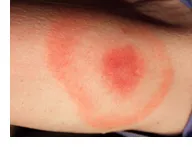
Erythema Migrans: Starts as a small red spot that expand, forming a circular, triangular or oval shaped rash that resembles a bulls eye. As the infection spreads the rash can appear on different parts of the body.
a>


Arthritis: After several weeks of being infected with Lyme disease approximately 60% of those people not treated with antibiotics develop recurrent attacks of painful and swollen joints that last a few days to a few months.
(Original source here) 
 Neurological Symptoms: Lyme disease can also affect the nervous system, causing symptoms such as stiff neck and severe headache (meningitis), temporary paralysis of facial muscles (Bell's palsy), numbness, pain or weakness in the limbs, or poor coordination.

 Neuropsychiatric: mood swings, violent outbursts, irritability, depression, disturbed sleep (too Reproductive: testicula r pain / pelvic pain, menstrual irregularity, milk p roduction (lactation), . O ther: fever, sweats, or chills, weight change (loss or gain), fatigue, tiredness, h air loss, swo llen glands, sore throat, diffi culty swallowing, swelling around the eyes. much, too l ittle, early awakening), personality changes, obsessive compulsive disorder, paranoia, panic anxiety attack, hallucinations.
.

 Heart problems:
Fewer than one out of 10 Lyme disease patients develops heart problems, such as an irregular, slow heartbeat, which can be signaled by dizziness or shortness of breath. These symptoms rarely last more than a few days or weeks. Such heart abnormalities generally appear several weeks after infection, and usually begin to resolve even before treatment.

Other symptoms:  Less commonly, Lyme disease can result in eye inflammation and severe fatigue, although none of these problems is likely to appear without other Lyme disease symptoms being present.
http://www.webmd.com/rheumatoid-arthritis/arthritis-lyme-disease


Tuesday, April 2, 2013

Lyme disease: An emerging Epidemic

Lyme Disease is a disease that is emerging everywhere. This disease originates from a bacteria transmitted through the bite of a tick and can remain hidden. This is a disease that is unknown when getting it and can remain that way because of the similar conditions as Multiple Sclerosis, ALS, ADHD and others. The symptoms are multiple lesions, persistent headache, tingling, burning, Intermittent joint pain and swelling, impaired motor coordination, irregular heart rhythm, muscle pain, swelling and also facial paralysis. I chose this topic because my mom was recently diagnosed with this disease. I hardly know about this emerging epidemic and really wanted to learn more about it. http://www.projectcensored.org/top-stories/articles/21-lyme-disease-an-emerging-epidemic/