 |
| (original source here) |
 |
| (original source here) |
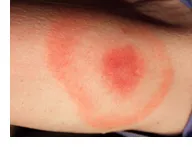
Erythema Migrans: Starts as a small red spot that expand, forming a circular, triangular or oval shaped rash that resembles a bulls eye. As the infection spreads the rash can appear on different parts of the body.
a>

Arthritis: After several weeks of being infected with Lyme disease approximately 60% of those people not treated with antibiotics develop recurrent attacks of painful and swollen joints that last a few days to a few months.
(Original source here)
Neurological Symptoms: Lyme disease can also affect the nervous system, causing symptoms such as stiff neck and severe headache (meningitis), temporary paralysis of facial muscles (Bell's palsy), numbness, pain or weakness in the limbs, or poor coordination.
Neuropsychiatric: mood swings, violent outbursts, irritability, depression, disturbed sleep (too Reproductive: testicula r pain / pelvic pain, menstrual irregularity, milk p roduction (lactation), . O ther: fever, sweats, or chills, weight change (loss or gain), fatigue, tiredness, h air loss, swo llen glands, sore throat, diffi culty swallowing, swelling around the eyes. much, too l ittle, early awakening), personality changes, obsessive compulsive disorder, paranoia, panic anxiety attack, hallucinations.
.
Heart problems:
Fewer than one out of 10 Lyme disease patients develops heart problems, such as an irregular, slow heartbeat, which can be signaled by dizziness or shortness of breath. These symptoms rarely last more than a few days or weeks. Such heart abnormalities generally appear several weeks after infection, and usually begin to resolve even before treatment.
Other symptoms: Less commonly, Lyme disease can result in eye inflammation and severe fatigue, although none of these problems is likely to appear without other Lyme disease symptoms being present.
http://www.webmd.com/rheumatoid-arthritis/arthritis-lyme-disease

No comments:
Post a Comment